
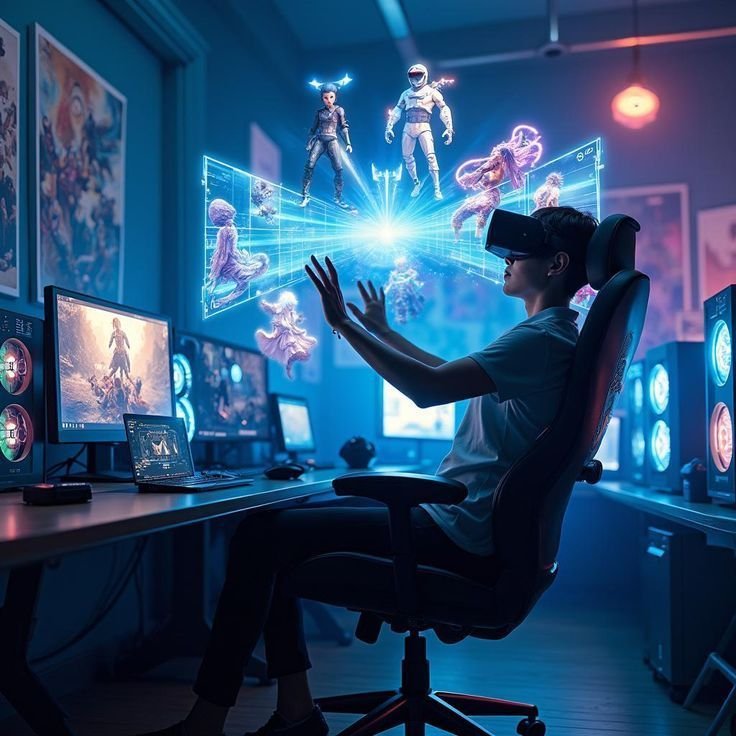
Future of virtual reality gaming brings a glimpse into the exciting evolution of gaming technology, promising immersive experiences and endless possibilities. From its humble beginnings to the cutting-edge innovations of today, virtual reality gaming is poised to revolutionize the gaming industry as we know it.
Virtual reality gaming has come a long way, and the future holds even more thrilling advancements that will redefine how we play and interact with games.
Overview of Virtual Reality Gaming
Virtual Reality Gaming is a form of gaming where players are immersed in a computer-generated environment through the use of virtual reality headsets and other peripherals. It allows players to experience games in a more realistic and immersive way, often providing a sense of presence in the virtual world.
The current state of virtual reality gaming technology has seen significant advancements in recent years. High-quality VR headsets like the Oculus Rift, HTC Vive, and PlayStation VR offer players a more immersive gaming experience with realistic graphics and responsive controls. Developers are also creating a wide range of VR games across various genres to cater to different interests and preferences.
The impact of virtual reality gaming on the gaming industry has been substantial. It has opened up new possibilities for game developers to create innovative and immersive gaming experiences. Virtual reality gaming has also attracted a new audience of players who are looking for a more immersive and interactive gaming experience. As the technology continues to evolve, we can expect to see even more groundbreaking developments in virtual reality gaming in the future.
Evolution of Virtual Reality Gaming
Virtual reality gaming has come a long way since its inception, with advancements in technology continually shaping its evolution.
History of Virtual Reality Gaming
- In the 1980s, early attempts at virtual reality gaming emerged with primitive graphics and limited interactivity.
- The 1990s saw a surge in interest with the release of VR headsets like the Sega VR and Nintendo Virtual Boy, although they were met with mixed reviews.
- It wasn’t until the 2010s that virtual reality gaming truly took off, with the introduction of more advanced headsets like the Oculus Rift and HTC Vive.
Technological Advancements Driving Evolution
- Improvements in display resolution have led to more immersive and realistic visuals, enhancing the gaming experience.
- Enhanced motion tracking and controllers have allowed for more precise and natural movements within virtual environments.
- The development of haptic feedback technology has enabled players to feel tactile sensations, further blurring the line between virtual and reality.
- Advancements in artificial intelligence and machine learning have made NPCs (non-playable characters) more lifelike and responsive, increasing the depth of gameplay.
Immersive Experiences in Virtual Reality Gaming
Virtual reality gaming offers players a truly immersive experience by transporting them into a virtual world where they can interact with the environment and characters in a much more realistic and engaging way. The technology allows users to feel like they are actually inside the game, making the experience more intense and thrilling.
Examples of Immersive Virtual Reality Games
- Beat Saber: Players use lightsabers to slash through blocks to the beat of the music, creating a highly immersive and rhythmic experience.
- Half-Life: Alyx: This game immerses players in the popular Half-Life universe, allowing them to explore environments, solve puzzles, and engage in combat in a truly immersive way.
- Resident Evil 7: Biohazard: Known for its intense horror experience, this game in virtual reality puts players right in the middle of a terrifying survival horror story.
Enhancing User Engagement and Immersion
Virtual reality technology enhances user engagement and immersion in gaming by providing a sense of presence and realism that traditional gaming cannot match. The use of VR headsets and motion controllers allows players to interact with the game world in a more natural and intuitive way, making the experience feel more lifelike. The ability to look around and explore the virtual environment from different angles also adds to the immersive nature of VR gaming. Overall, virtual reality technology creates a more engaging and captivating gaming experience that truly transports players to another world.
Challenges and Opportunities in Virtual Reality Gaming
Virtual reality gaming presents developers with a unique set of challenges that need to be addressed to fully harness the potential growth and innovation opportunities in this sector. Let’s delve into the obstacles facing virtual reality gaming developers and the promising opportunities that lie ahead.
Challenges Faced by Virtual Reality Gaming Developers
- Hardware Limitations: Developing games for virtual reality requires high-performance hardware to deliver immersive experiences. The cost of this hardware can be a barrier for both developers and consumers.
- Motion Sickness: Some players experience motion sickness or discomfort when using virtual reality headsets, which can limit the audience for VR games.
- Content Creation: Creating compelling and engaging content for virtual reality gaming requires specialized skills and expertise, making it a challenge for developers to meet the demands of this evolving industry.
- Compatibility Issues: Ensuring compatibility across different virtual reality platforms and devices can be complex and time-consuming for developers, hindering the seamless experience for players.
Opportunities for Growth and Innovation in Virtual Reality Gaming
- Enhanced Immersive Experiences: Virtual reality technology offers the opportunity to create truly immersive gaming experiences that blur the lines between reality and virtual worlds, providing new and exciting possibilities for game developers.
- Market Expansion: As virtual reality technology becomes more accessible and affordable, the market for VR gaming is expected to grow, presenting developers with a larger audience and potential for increased revenue.
- Integration of Emerging Technologies: Virtual reality gaming can benefit from the integration of emerging technologies such as artificial intelligence, haptic feedback, and augmented reality, opening up new avenues for innovation and creativity.
- Social Interaction: Virtual reality gaming has the potential to revolutionize social interaction in gaming by creating shared virtual spaces where players can connect and collaborate in ways that were previously not possible.
Social and Cultural Impact of Virtual Reality Gaming
Virtual reality gaming has a significant impact on society and culture, influencing the way we interact and perceive the world around us. As this technology becomes more prevalent, it is crucial to understand the implications it has on individuals and communities.
Social Implications of Virtual Reality Gaming
Virtual reality gaming has the potential to reshape social interactions by creating immersive experiences that bring people together in virtual worlds. This can lead to enhanced communication and collaboration among players, fostering new relationships and connections.
Moreover, virtual reality gaming can also raise concerns about addiction and isolation, as individuals may become engrossed in these virtual environments at the expense of real-life relationships and responsibilities.
Cultural Influence of Virtual Reality Gaming
The cultural impact of virtual reality gaming is evident in its integration into popular culture, with virtual reality headsets and games becoming mainstream entertainment options. This technology has the power to shape cultural norms and preferences, influencing everything from art and music to fashion and storytelling.
Virtual reality gaming can also provide a platform for cultural exchange and exploration, allowing players to experience different perspectives and traditions from around the world.
Future Effects on Social Interactions and Behaviors
Looking ahead, virtual reality gaming is poised to continue shaping social interactions and behaviors in the future. As the technology advances, we may see a blurring of boundaries between virtual and physical reality, leading to new modes of communication and social norms.
Additionally, virtual reality gaming has the potential to promote empathy and understanding by enabling players to step into the shoes of others and experience different viewpoints firsthand.
Future Trends in Virtual Reality Gaming
As technology continues to advance at a rapid pace, the future of virtual reality gaming holds exciting possibilities. With the integration of cutting-edge technologies, such as augmented reality and mixed reality, the gaming experience is set to evolve in innovative ways. Let’s explore some potential trends that we can expect to see in the world of virtual reality gaming.
Emerging Concepts: Augmented Reality and Mixed Reality
Augmented reality (AR) and mixed reality (MR) are two concepts that are gaining traction in the gaming industry. AR overlays digital content onto the real world, enhancing the player’s environment with interactive elements. On the other hand, MR combines elements of both virtual reality and augmented reality, creating a more immersive and interactive gaming experience. These emerging technologies have the potential to revolutionize the way we play games, blurring the lines between the virtual and physical worlds.
Future of Virtual Reality Gaming Platforms
Virtual reality gaming platforms are expected to become more sophisticated and user-friendly in the future. With advancements in hardware and software, we can anticipate more powerful VR headsets, controllers, and accessories that enhance the overall gaming experience. Additionally, the integration of artificial intelligence and machine learning technologies could personalize gameplay, making it more engaging and immersive for players.
Epilogue
In conclusion, the future of virtual reality gaming is a realm of endless potential, where boundaries blur between reality and imagination, offering gamers a new dimension of entertainment. As technology continues to progress, we can expect virtual reality gaming to shape the future of gaming in ways we can only dream of today.
