
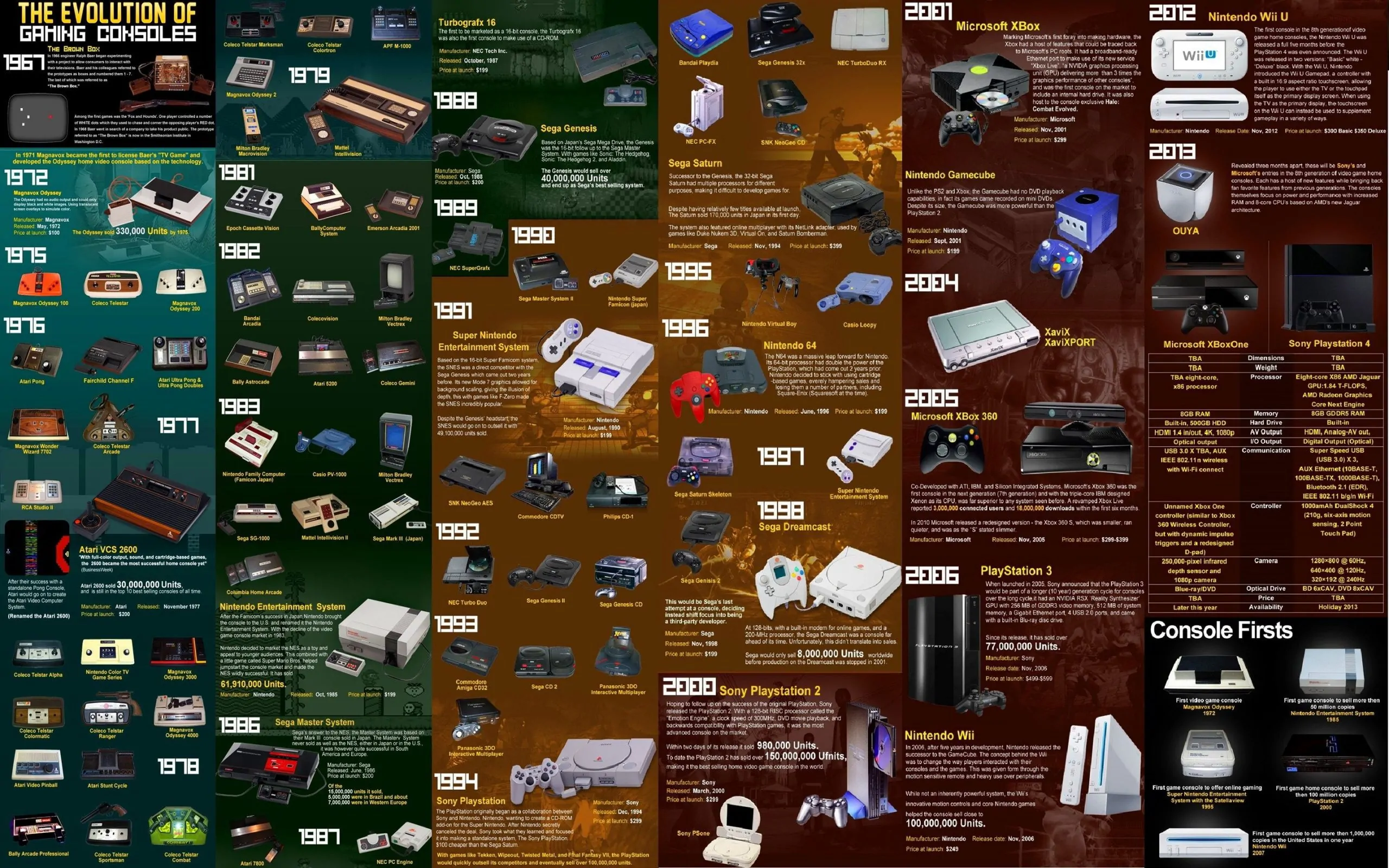
History of video game consoles sets the stage for a thrilling exploration into the evolution of gaming technology, from the early days to the modern era. Dive into this fascinating journey as we uncover the key milestones, console wars, and technological advancements that have shaped the gaming landscape we know today.
Evolution of Video Game Consoles
The evolution of video game consoles has been a fascinating journey marked by technological advancements and innovation.
First Commercially Successful Video Game Console
The first commercially successful video game console was the Magnavox Odyssey, released in 1972. It featured simple games like Pong and Table Tennis, captivating players with its groundbreaking technology.
Comparison of Early Consoles with Modern Ones
Early consoles like the Atari 2600 or Nintendo Entertainment System had basic graphics and limited gameplay compared to modern consoles such as the PlayStation 5 or Xbox Series X. The advancement in hardware, graphics capabilities, online connectivity, and immersive gaming experiences sets modern consoles apart from their predecessors.
Technological Advancements Shaping Console Evolution
Technological advancements like faster processors, high-definition graphics, virtual reality capabilities, and cloud gaming have revolutionized the gaming industry. These advancements have enabled developers to create more realistic and immersive gaming experiences, pushing the boundaries of what is possible in the world of video game consoles.
Key Milestones in Console History
The history of video game consoles is rich with significant milestones that have shaped the gaming industry as we know it today. Let’s explore some of the key moments that have marked the evolution of console gaming.
Atari 2600: Pioneering Home Gaming
The release of the Atari 2600 in 1977 marked a turning point in the history of video game consoles. It was one of the first consoles to bring gaming into the homes of consumers on a large scale, popularizing the concept of home gaming. With iconic games like “Pac-Man” and “Space Invaders,” the Atari 2600 laid the foundation for the future of console gaming.
Nintendo Entertainment System (NES): Reviving the Industry
The Nintendo Entertainment System, released in 1985, revitalized the video game industry after the North American video game crash of 1983. With groundbreaking titles such as “Super Mario Bros.” and “The Legend of Zelda,” the NES introduced a new era of storytelling and gameplay mechanics that would influence generations of gamers to come.
PlayStation: Redefining Gaming
Sony’s PlayStation, launched in 1994, revolutionized the gaming landscape with its CD-based format and advanced graphics capabilities. The PlayStation not only introduced iconic franchises like “Final Fantasy” and “Metal Gear Solid,” but it also paved the way for 3D gaming experiences that were previously unimaginable. The success of the PlayStation solidified Sony’s position as a major player in the console market.
These milestones, from the Atari 2600 to the Nintendo Entertainment System and PlayStation, have each played a pivotal role in shaping the gaming industry into the global phenomenon it is today. Each console introduced new technologies, gameplay experiences, and iconic franchises that have contributed to the growth and evolution of console gaming over the years.
Console Wars
Console wars refer to the intense competition between different video game console manufacturers to dominate the market and attract a larger consumer base. These battles often result in innovative technologies, exclusive game titles, and aggressive marketing strategies to gain a competitive edge.
Nintendo vs. Sega
In the 1990s, one of the most iconic console wars was between Nintendo and Sega. Nintendo’s Super Nintendo Entertainment System (SNES) and Sega’s Genesis (Mega Drive) were the leading consoles of the era. Nintendo focused on family-friendly games and iconic franchises like Mario and Zelda, while Sega targeted an older audience with edgier titles and Sonic the Hedgehog. This rivalry resulted in the famous “Genesis does what Nintendon’t” marketing campaign and ultimately led to the success of both companies in the gaming industry.
PlayStation vs. Xbox
Another notable console war is the ongoing battle between Sony’s PlayStation and Microsoft’s Xbox consoles. Both companies have released multiple generations of consoles with advanced graphics, online capabilities, and exclusive game titles. PlayStation focused on a diverse range of gaming experiences and exclusive titles like God of War and Uncharted, while Xbox emphasized online gaming services like Xbox Live and popular franchises like Halo and Gears of War. This competition has driven innovation in gaming technology and services, benefiting gamers with a wide variety of choices and experiences.
Technological Advancements
The evolution of video game consoles has been significantly influenced by technological advancements over the years. From basic 2D graphics to stunning 3D visuals, the progress in processors, graphics cards, and memory has played a crucial role in enhancing console performance and gaming experience.
Shift from 2D to 3D Graphics
The transition from 2D to 3D graphics in console gaming marked a major milestone in the industry. This shift allowed for more immersive and realistic gaming environments, enabling players to explore worlds in three dimensions. Games like Super Mario 64 on the Nintendo 64 showcased the potential of 3D graphics and set a new standard for visual quality in gaming.
Role of Processors, Graphics Cards, and Memory
Processors, graphics cards, and memory have been instrumental in pushing the boundaries of console performance. Advanced processors enable faster calculations and smoother gameplay, while high-quality graphics cards deliver stunning visuals and realistic effects. Additionally, increased memory capacity allows for larger game worlds, higher resolution textures, and seamless multitasking capabilities. The combination of these components has led to the development of more powerful and sophisticated gaming consoles, providing players with unparalleled gaming experiences.
Final Review
As we wrap up our discussion on the History of video game consoles, we reflect on the transformative impact of iconic consoles, the fierce battles of console wars, and the pivotal role of technological advancements. This journey through gaming evolution highlights how far we’ve come and the exciting possibilities that lie ahead in the world of video game consoles.
